|
Navigation
LakesnWoods.com
Home
Page
Contact Us
Privacy
Minnesota History Shop
Visit The Minnesota History Shop
www.minnesotahistoryshop.com
Historic maps
Historic books
Historic framed art
Historic
postcards
Clothing with historic
images
And much more!!! |
Winton Guide:
Photo
Gallery
Location
Geography
Demographics
History
Government
Post Office
News
Weather
Street Map
Events
Attractions
Recreation
Lakes
Health Care
Schools
Churches
Media
Motels
Resorts
Campgrounds
Businesses
Aerial Photo
Topographic Map Nearby Communities
Aurora
Babbitt
Biwabik
Cook
Ely
Hoyt Lakes
Isabella
Soudan
Tower
Virginia
© 2004-2024
Lakeweb1 Internet Services
All Rights Reserved
DCMA, Defamation, Copyright and Trademark Infingement Policy
|
WANTED! Do you have photos, historical accounts or
other items pertaining to the Winton area? Would you like to
share this historical information with the world?
LakesnWoods.com would like to publish your Winton photos
(current or historical) or historical accounts on this website.
Original materials can be returned and your privacy will be
respected.
Contact us |
|
Winton Minnesota Community Guide
Location:
Population:
| Winton (city) |
1970 |
1980 |
1990 |
2000 |
2010 |
2000-2010
Change |
| Actual |
Percent |
| Population |
294 |
276 |
169 |
185 |
172 |
-13 |
-7.03 |
| Land Area (sq. mile) |
0.10 |
0.13 |
0.13 |
0.13 |
0.13 |
0 |
0.00 |
| Density (persons per sq. mile) |
2,940.00 |
2,123.08 |
1,300.00 |
1,421.19 |
1,323.08 |
-98.11 |
-6.90 |
| Housing Units |
99 |
134 |
89 |
97 |
110 |
+13 |
+13.40 |
| Households |
-- |
119 |
72 |
85 |
88 |
+3 |
+3.53 |
| Persons Per Household |
-- |
2.32 |
2.35 |
2.18 |
1.95 |
-0.23 |
-10.55 |
Geography:
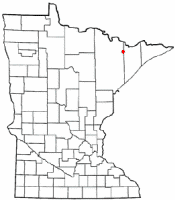
Winton is a city in Saint Louis County, Minnesota.
State Highway 169 serves as a main route into Winton. According to the
United States Census Bureau, the city has a total area of 0.13 square
miles (0.34 km2), all of it land. The elevation is 1,332 feet (406 m).
From
Wikipedia, the free
encyclopedia.
Demographics:
As of the census of 2010, there were 172 people, 88
households, and 40 families residing in the city. The
population density was 1,323.1 inhabitants per square
mile (510.9/km2). There were 110 housing units at an
average density of 846.2 per square mile (326.7/km2).
The racial makeup of the city was 98.8% White and 1.2%
from two or more races.
There were 88 households of which 18.2% had children
under the age of 18 living with them, 34.1% were married
couples living together, 6.8% had a female householder
with no husband present, 4.5% had a male householder
with no wife present, and 54.5% were non-families. 45.5%
of all households were made up of individuals and 12.5%
had someone living alone who was 65 years of age or
older. The average household size was 1.95 and the
average family size was 2.75.
The median age in the city was 45.5 years. 19.8% of
residents were under the age of 18; 8.2% were between
the ages of 18 and 24; 21% were from 25 to 44; 33.7%
were from 45 to 64; and 17.4% were 65 years of age or
older. The gender makeup of the city was 59.9% male and
40.1% female.
From
Wikipedia, the free
encyclopedia.
History:
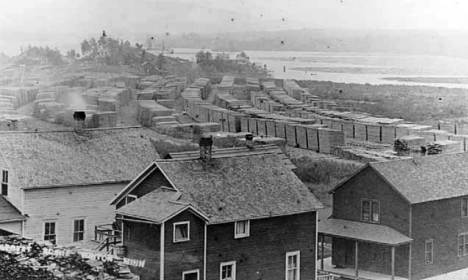
WINTON, a city in section 24 of Morse Township (T.
63N, R. 12W), incorporated as a village on July 23, 1901, reincorporated
on April 6, 1906, and separated from the township on April 23, 1906; the
post office began in 1895; it had a Duluth, Missabe and Iron Range
Railroad station, also shown as Winpon. The village was named in honor
of William C. Winton, a member of the Knox Lumber Company of Duluth,
which did much logging around Ely and Winton. He was superintendent for
building the first sawmill at Winton in 1898. Courtesy
Minnesota Historical Society
Government:
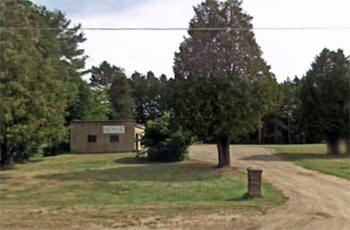
Winton City Hall
102 N Main Street
PO Box 163
Winton, MN 55796
Phone: (218) 365-5941
Regular Business Hours:
not
available
City Council Meetings:
1st Monday of the
month at 6:00 pm


 |
 |
|
City |
Terms Ends |
Name |
|
Phone |
| Mayor |
12/31/2022 |
Kathy Brandau
7 Lake Street N - PO Box
206
Winton, MN 55796 |
|
(218) 365-3924 |
| Clerk |
12/31/2022 |
Anne Jackson
137 Riverview Drive -
PO Box 163
Winton, MN 55796 |
|
(218) 365-4467 |
| Treasurer |
12/31/2024 |
not available
address not
available
Winton, MN 55796 |
|
-- |
| Trustee |
12/31/2022 |
Marlene Zorman
address
unavailable
Winton, MN 55796 |
|
(218)
235-1949 |
| Trustee |
12/31/2024 |
Kathy Edman
116 Lake Street
Winton, MN 55796 |
|
(218) 365-3475 |
| Trustee |
12/31/2024 |
Susan Scufsa
310 West Street
N
Winton, MN 55796 |
|
(218)
365-5305 |
|
State |
|
|
|
| MN House - District
3A |
12/31/2022 |
Rob Ecklund (DFL)
409 State Office Building
St. Paul,
MN 55155 |
|
(651) 296-2190
(218) 341-6133 |
| MN Senate - District
3 |
12/31/2024 |
Thomas Bakk (I)
Minnesota Senate Bldg. Rm 328
St. Paul, MN
55155 |
|
(651) 296-8881 |
| MN Governor |
12/31/2022 |
Governor Tim Walz
75 Rev Dr. Martin Luther King Jr.
St. Paul, MN 55155 |
|
(651) 201-3400
(800) 657-3717 |
|
Federal |
|
|
|
| US House - District 8 |
12/31/2022 |
Pete Stauber (R)
461 Cannon HOB
Washington, DC 20515 |
|
(202) 225-6211 |
| US Senate |
12/31/2022 |
Amy Klobuchar (DFL)
425 Dirksen Senate Building
Washington, DC 20510 |
|
(202) 224-3244 |
| US Senate |
12/31/2022 |
Tina Smith (DFL)
720 Hart Senate Office Bldg.
Washington, DC 20510 |
|
(202) 224-5641 |
| US President |
12/31/2024 |
Joe Biden (D)
1600
Pennsylvania Avenue NW
Washington, DC 20500 |
|
not available |
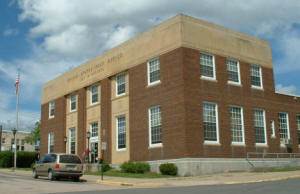
Post Office: A post office was established in Winton in 1895, and remained in operation until
2018.
Today mail service is handled by the Ely Post Office.
US Post Office
34 S 2nd Avenue E
Ely, MN 55790
Phone: (218) 365-3210
Toll Free: (800) ASK-USPS
Regular Business Hours:
Week Days
8:00 am - 4:15 pm
Saturday
10:00 am - 12:00 pm
|
 |
Utilities:
| Utility Type |
Utility Name |
Utility Phone |
| Electricity |
Minnesota Power |
(218) 723-3913 |
| Natural Gas |
n/a |
-- |
| Wastewater |
n/a |
-- |
| Water |
n/a |
-- |
| Telephone |
Frontier
Communications |
(800) 435-1504 |
| Cable TV |
n/a |
-- |
Major
Employers:
|
Employer |
Products/Services |
Employees |
|
n/a |
News:
Weather:
Map:
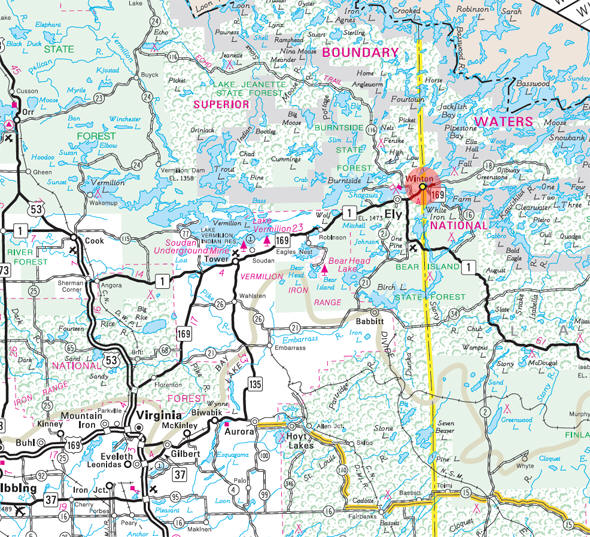
Minnesota State
Highway Map of the Winton Minnesota area
Events:
Attractions:
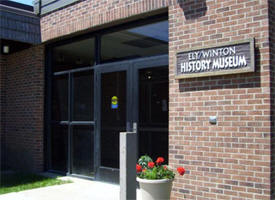
Ely-Winton Historical Society
1900 E Camp Street
Ely, MN 55731
Phone: (218) 365-3226
The Ely-Winton Historical
Society is located within the Vermilion Community College in
Ely, Minnesota. It has been in operation since 1962 and moved to
a museum especially designed for them in 1982. The purpose of
the Society is to collect and preserve items from the history of
the region and then to enlighten visitors through displays and
programs. The museum walks the visitor through the history of
the area beginning with the prehistoric peoples who populated
places along lakes and rivers. Their Native American display
exhibits beautiful examples of beadwork and basketry. As logging
and iron ore mining were two major industries during the first
half of the 20th Century, extensive displays of both are on
view. Other areas of interest are Immigration, Medicine, and the
Boundary Waters Canoe Area Wilderness.
|
 |
Recreation:
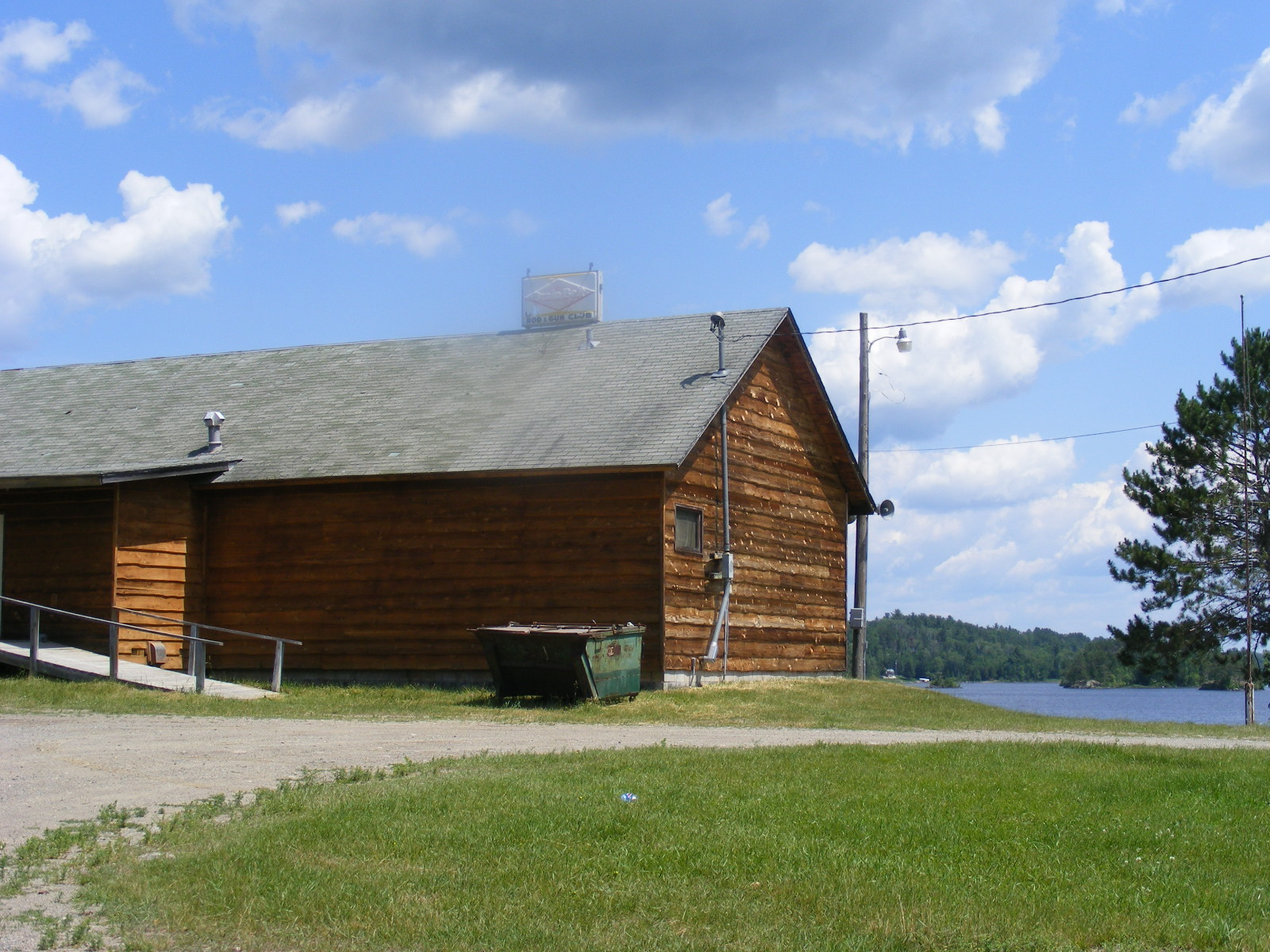
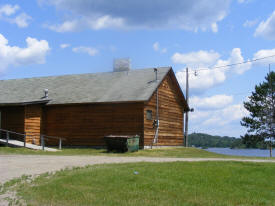
Ely-Winton Rod &
Gun Club
10 Long Branch Road
PO Box 41
Winton, MN 55796
Phone: (218) 365-7546
The Longbranch Clubhouse is
open during special events throughout the year. We sponsor two
fishing contests each year...one in the winter on Fall Lake and
also the Summer "HAWG" Contest in August.
|
 |
Lakes:
|
Lake Name |
Size
(acres) |
Lake info |
Lake Map |
Rec Map |
Topo Map |
| Basswood |
22,722 |
 |
|
|
|
| Browns |
205 |
|
|
|
|
| Cedar |
465 |
|
|
|
|
| Ella Hall |
372 |
|
|
|
|
| Fall |
2,258 |
|
|
|
|
| Farm |
1,328 |
|
|
|
|
| Gabbro |
896 |
|
|
|
|
|
Garden |
670 |
|
|
|
|
| Greenstone |
345 |
|
|
|
|
| Moose |
1,211 |
|
|
|
|
| Muskeg |
132 |
|
|
|
|
| Newton |
516 |
|
|
|
|
| Picketts |
28 |
|
n/a |
|
|
| Shagawa |
2,344 |
|
|
|
|
| Snowbank |
4,273 |
|
|
|
|
| South Farm |
618 |
|
|
|
|
| White Iron |
3,429 |
|
|
|
|
|
click any of the checkmarks to
go to the linked map or page |
Health
Care:
| none
- served by Ely hospital and clinics |
Schools:
Churches:
Media:
|
none - served by Ely media |
Motels:
Resorts:
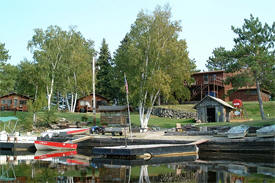
Packsack Canoe
Trips & Log Cabins
129 Winton Point Road
Winton, MN 55796
Phone: (218) 365-3788
We at Packsack absolutely
adore the Boundary Waters Canoe Area Wilderness (BWCAW), as well
as Ely and the surrounding area. This area is so rich in
adventure, spectacular scenery, incredible fishing, geologic
history, wildlife, and pristine wilderness. We make every
attempt to impart our enthusiasm and passion for the Boundary
Waters Minnesota to every guest, treating this place and each
guest as a wonderful gift to be cherished – every day!


|
 |
Campgrounds:
Businesses:
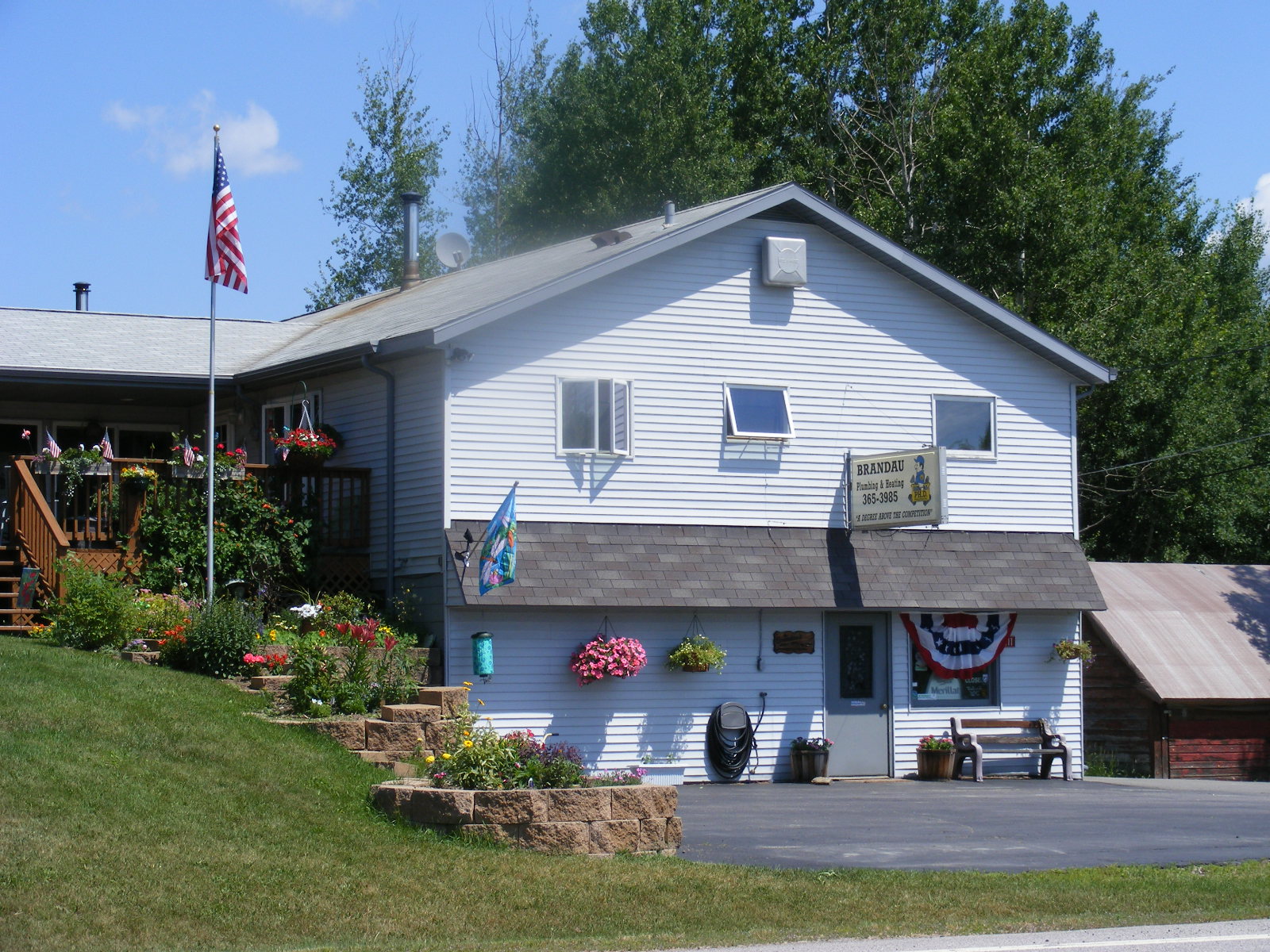
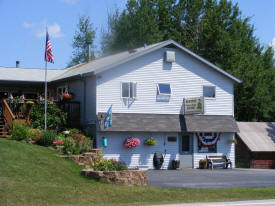
Brandau
Plumbing & Heating
1111 State Highway 169
Winton, MN 55796
Phone: (218) 365-3985
Brandau Plumbing & Heating is
a family owned and operated business established in 1989. The
owner, Mike Brandau, has a Master Plumber's license and is a
certified Uponor Wirsbo installer. He oversees all the plumbing
and heating operations.

|
 |
Ely-Winton Rod &
Gun Club
10 Long Branch Road
PO Box 41
Winton, MN 55796
Phone: (218) 365-7546
The Longbranch Clubhouse is
open during special events throughout the year. We sponsor two
fishing contests each year...one in the winter on Fall Lake and
also the Summer "HAWG" Contest in August.
|
|
Packsack Canoe
Trips & Log Cabins
129 Winton Point Road
Winton, MN 55796
Phone: (218) 365-3788
We at Packsack absolutely
adore the Boundary Waters Canoe Area Wilderness (BWCAW), as well
as Ely and the surrounding area. This area is so rich in
adventure, spectacular scenery, incredible fishing, geologic
history, wildlife, and pristine wilderness. We make every
attempt to impart our enthusiasm and passion for the Boundary
Waters Minnesota to every guest, treating this place and each
guest as a wonderful gift to be cherished – every day!
|
|
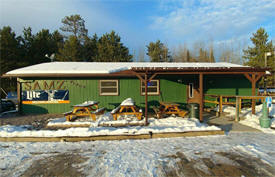
Samz Place
1225 Winton Road
PO Box 41
Winton, MN 55796
Phone: (218) 365-4175
Neighborhood bar featuring
drink specials and pull tabs. Stop by!
|
 |
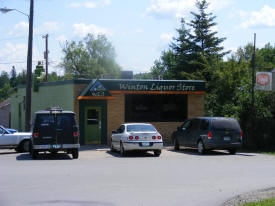
Winton City Hall
and Community Building
102 N Main Street
PO Box 163
Winton, MN 55796
Phone: (218) 365-5941
|
|
Winton Roadhouse
252 Main Street
Winton, MN 55796
Phone: (218) 365-3339
Serving the best homemade
pizzas and flatbreads on the Iron Range. All your standard
favorites plus Philly Cheesesteak, Buffalo Chicken, Jambalaya,
Surf and Turf, Sriracha Salmon, Porketta, Taco, Chicken Alfredo,
Pulled Pork and more. If we can imagine it ..... we put it in a
flatbread pizza!


|
 |
Aerial Photo:
Topographic Map:
[click map to enlarge, zoom in or zoom out]
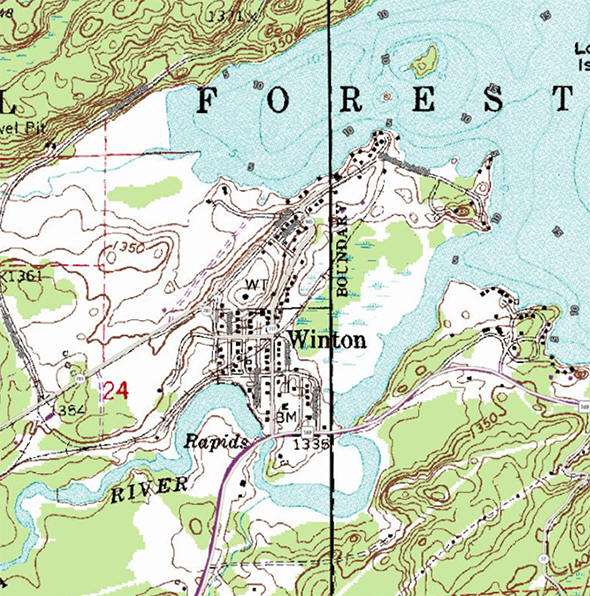 Topographic map is courtesy of the Minnesota DNR
-
click map to zoom or enlarge
Topographic map is courtesy of the Minnesota DNR
-
click map to zoom or enlarge |
|